The goal of an educational institution - a definition


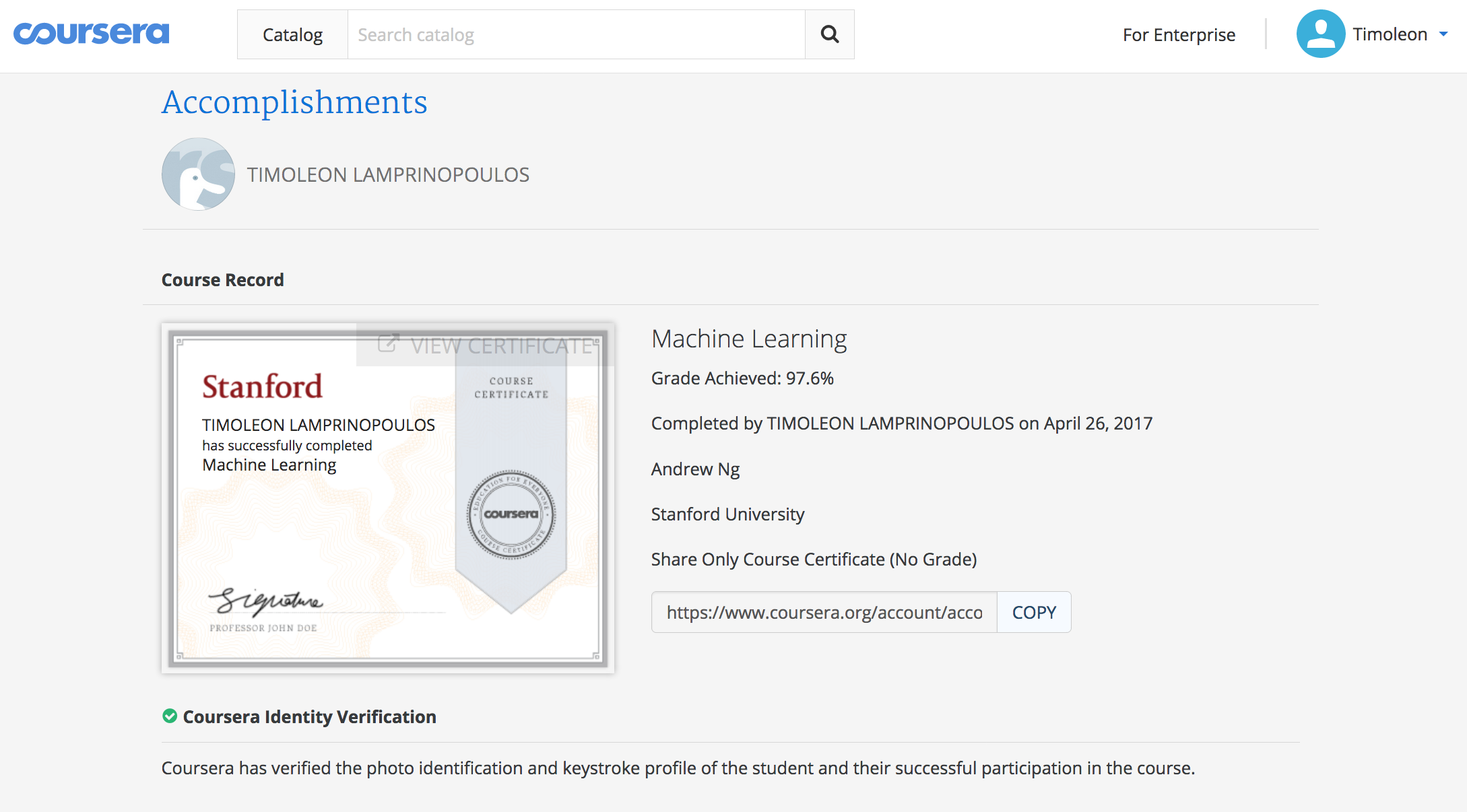
My first teacher in Artificial Intelligence was Andrew Ng. Well, I have not met the guy in person (not yet at least!): back in 2017 I did the "Machine Learning" specialization in Coursera. That course, when first launched in 2011, attracted over 100,000 students and had millions of enrollments over the years. It has an average rating of 4.9 out of 5 stars based on tens of thousands of reviews. For me, Andrew Ng is the best teacher in a MOOC (Massive Open Online Class) I have ever seen. Now, apart from Coursera, he delivers his classes through DeepLearning.ai.
In his recent article "Why Giving More Students A's Can Be a Good Thing" (The 2-min reading article is really worth reading), Andrew Ng critiques Harvard's decision to cap "A" grades at 20%, arguing that education should prioritize mastery over artificial exclusion. As he says:
- Institutions should focus on helping students build skills rather than acting as strict judges. High standards should be paired with unlimited retries on practice assignments so every student can succeed.
- While grade caps aim to counter inflation for employers, modern hirers rely on internal screening and interviews rather than GPAs (grade point averages) to evaluate competency.
- Instead of defining excellence through scarcity and filtering students out, elite institutions should focus on enabling 100% of their students to master a cutting-edge curriculum.
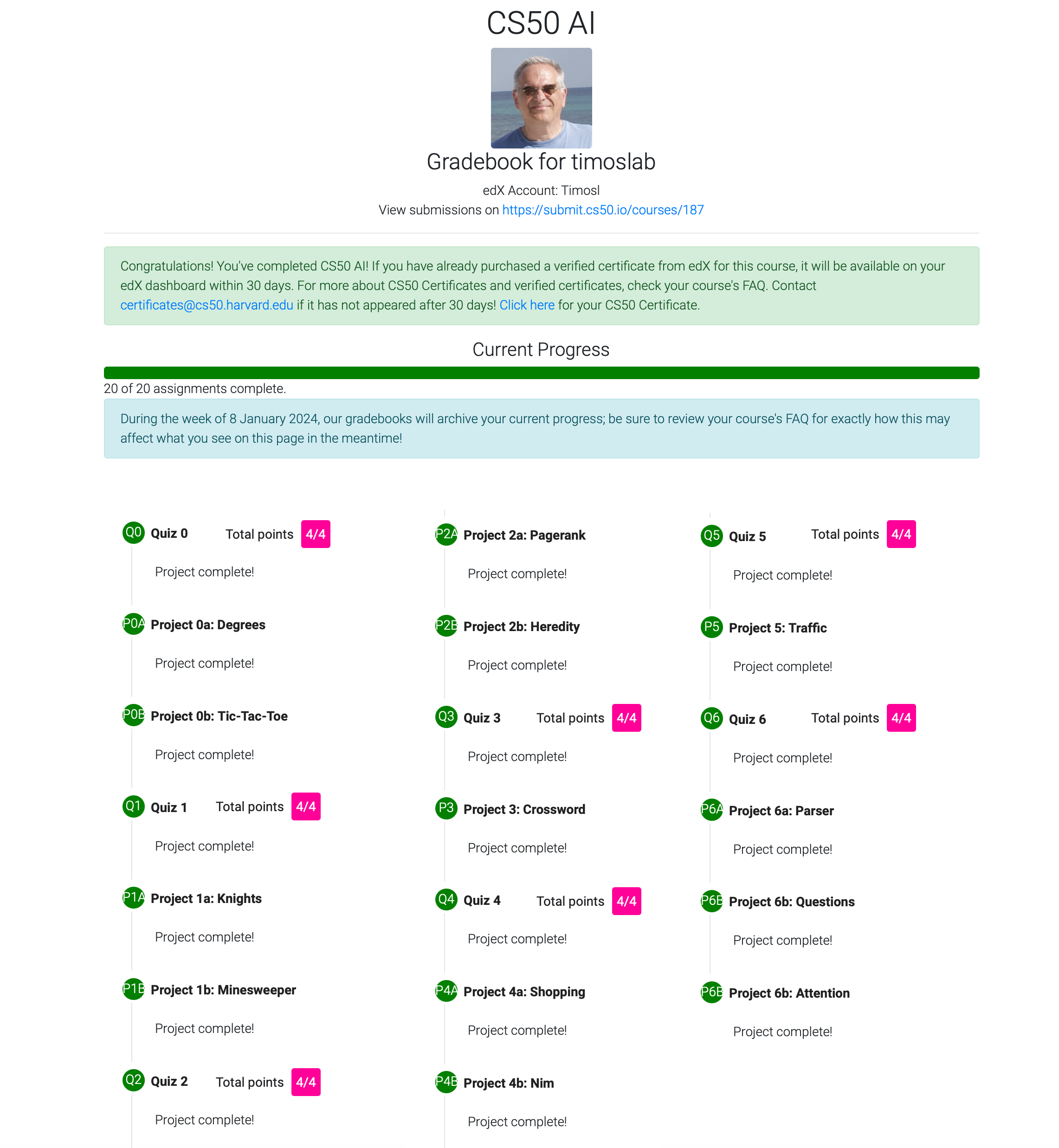
Back in 2024 I attended the "Introduction to Artificial Intelligence using Python" by Harvard University, via the edX platform. It is a very interesting course, built with a different mindset than "Machine Learning" of Coursera: the goal is mainly to judge the student. If you submit a false answer for eight times on an exam, you loose not only the exam, but the entire course and the ability to re-enroll!!! You may ask why?? Because the available set of questions is limited, answers may be provided in a combinatorial way to get the correct answer and they try to address the problem in this way. In contrast, in the Machine Learning course, there is a huge number of questions. It is impossible to pass an exam using a combinatorial approach: that is how they allow the student to have an unlimited number of attempts and take into consideration the best grade by the student. Which system seems more fair to you? Which system allows the student to feel and work better? It is also evident that one must invest more effort to have a huge number of questions in a tutorial.
It is encouraging to see that in our turbulent world there are still people, like Andrew Ng, acting as light beacons amid chaos.
BTW: I got a 97.6% in "Machine Learning" and 100% in "Introduction to AI using Python", in case you're thinking I am badmouthing Harvard for personal reasons! Evidence below.